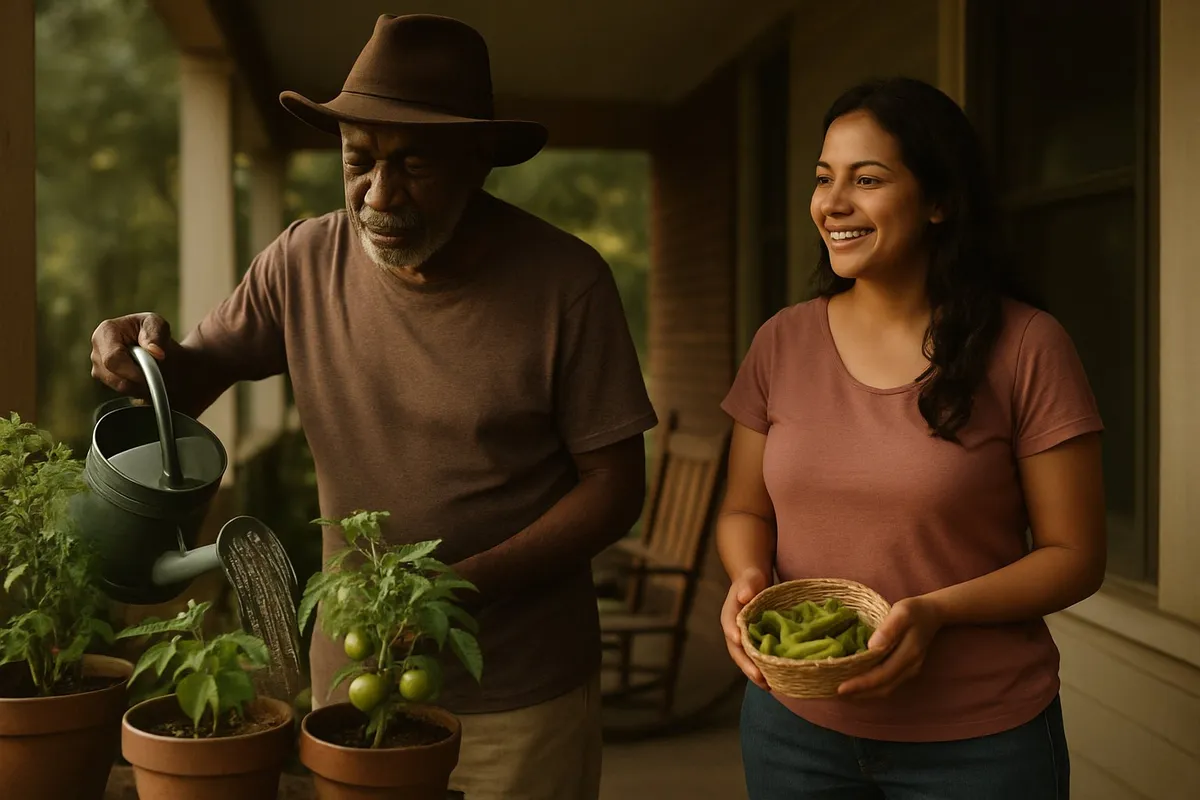
How Do You Keep Porch Plants and a Small Garden Going Through a Texas July?
By July, the tomatoes that looked so promising in spring can start to droop by lunchtime. Porch pots dry out fast, and the afternoon sun feels relentless. This article shares simple ways to help a small garden or porch pots through the hottest weeks. It also covers sharing the extras with neighbors.
Key points
- Water early in the morning, deeply and at the soil, rather than a quick sprinkle at midday.
- Afternoon shade and a layer of mulch help plants hold on to moisture.
- Extra vegetables, herbs and cuttings make a simple, friendly gift for neighbors.
Water at the right time, in the right way
Early morning is usually the kindest time to water. The air is cooler, so less water is lost before it soaks in, and leaves have time to dry during the day. Evening watering can work in a pinch, but leaves that stay wet overnight may invite disease.
Aim for the soil, not the leaves. A slow, deep soak helps roots grow down where the ground stays cooler. A light daily sprinkle tends to keep roots shallow and thirsty.
Pots dry out much faster than garden beds. Push a finger an inch or so into the soil. If it feels dry, water until it runs out the bottom. Small pots in full sun may need a check every day in July.
During dry spells, check whether your city or water utility has watering rules, and follow them.
Give plants a break from the afternoon sun
Move pots into afternoon shade. A spot with morning sun and afternoon shade suits many porch plants in midsummer. Grouping pots together also helps them hold humidity.
Add mulch. A few inches of shredded bark, leaves or straw over garden soil slows evaporation and keeps roots cooler. Leave a little space around the stems.
Try simple shade cloth. A light cloth over a raised bed during the hottest hours can help tender plants. An old sheet clipped to stakes can work too.
Let some things rest. Many spring crops slow down or stop producing in the hottest weeks. That is normal. Keep them watered, and many will pick up again as nights cool. Each season has its purpose, and a garden that rests in July is often getting ready to give again.
Share what you grow
A good week of okra, peppers or tomatoes can be more than one household can eat. A small bag left on a neighbor's porch is a simple kindness. You might also share cuttings from a hardy plant, extra herbs or a few seeds saved for fall.
Small gifts like these build neighborly ties that matter when someone needs help, such as a ride or a meal. An older neighbor who no longer gardens may especially enjoy something fresh. Carrying a little of one another's load is how good neighborhoods are made.
How Evergreen can help
Gardening keeps many people active, outdoors and connected, and that is worth protecting. When you are ready, we can review your health coverage and any supplemental policies, such as accident coverage, so you know how they work together. We explain options from several insurance companies in plain language. There is no fee to you for our help.
Common mistakes to avoid
Working in the midday heat. Garden chores belong in the cooler hours, the same as watering. Wear a wide-brimmed hat, drink water before you head out and rest in the shade. Older gardeners and people on certain medicines may feel the heat sooner, so ask your doctor or pharmacist if you have concerns.
Watering a little every day. Shallow watering keeps roots near the hot surface. Deeper, less frequent watering usually serves garden beds better, while pots may still need daily checks.
📌 Key Takeaway: Water deeply in the early morning, give plants afternoon shade, and share your extras with the neighbors.
If you'd like a calm review of your health coverage, we're glad to talk it through, with no pressure to decide anything.
Sources: Texas A&M AgriLife Extension; CDC: Extreme Heat
Evergreen Life & Health Agency LLC — Your Health, Your Worth: Designed With Divine Care. Katy, TX.